
How to Mic an Alto Saxophone
By Carson Quick on December 20, 2025

The Challenge
Recording a saxophone isn't as simple as pointing a mic at the bell. Unlike most instruments, the alto saxophone radiates sound from multiple locations: the bell projects low frequencies forward, while tone holes along the body emit mid and high frequencies in all directions. This complex radiation pattern means that where you place your microphone dramatically affects the tone you capture.
About this Guide
This guide takes an analytical, data-driven approach to saxophone microphone placement. By measuring frequency response across controlled recordings, it transforms subjective observations into quantifiable information. You can find that technical data here.
Audio engineers have long described saxophone recordings using terms like "warm," "bright," "full," and "articulate." These descriptions are valuable as they communicate musical intent and guide creative decisions. This guide doesn't replace that language. Instead, it provides a quantitative perspective that works alongside traditional descriptive terms. When an engineer says a position sounds "brighter," this research shows exactly which frequencies are being emphasized and by how much. The goal is to bridge subjective musical language with objective measurements, giving you both artistic vocabulary and analytical tools.
Thank You to Michael Anne Tolan for volunteering her time and saxophone talents toward making this research possible. Couldn't have done it without her.
What This Research Revealed
Through controlled testing of 11 microphone positions across 345 recordings, I quantified what audio engineers have long known intuitively: microphone placement can create 15-20 dB variations in upper harmonics. The difference between a warm jazz sound and a bright classical tone often comes down to inches.
🎷
Best Starting Points (Recommended)
12 inches from the bell
• Most balanced and natural sound
• Good body without harshness
• Works for most styles and recordings
Placing the microphone about a foot from the bell captures the saxophone in a way that closely resembles how it sounds in the room. It balances low-end body with articulation and avoids the aggressive edge that comes from very close miking. If you only use one mic and want a safe, reliable result, this is the best place to start.
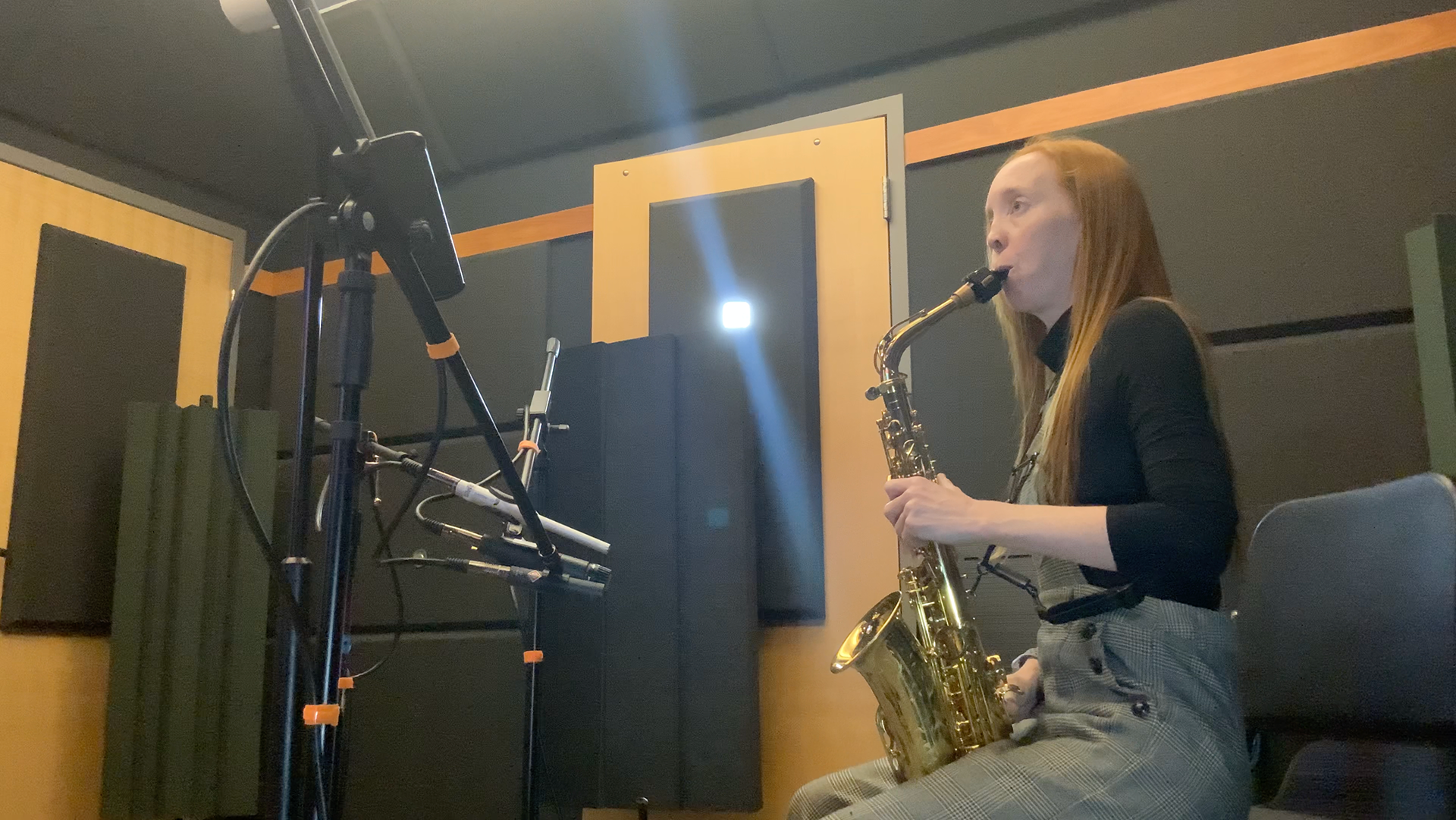

6–12 inches from the tone holes (mid-body)
• Clear articulation and detail
• Still sounds natural and full
• Great for solos, auditions, and exposed parts
Aiming the microphone toward the middle of the saxophone emphasizes articulation and note clarity while still capturing enough body. These two position highlights finger detail and fast passages without sounding thin. It may pick up some key noise depending on how close the microphone is, but it translates extremely well in clean or solo recordings.
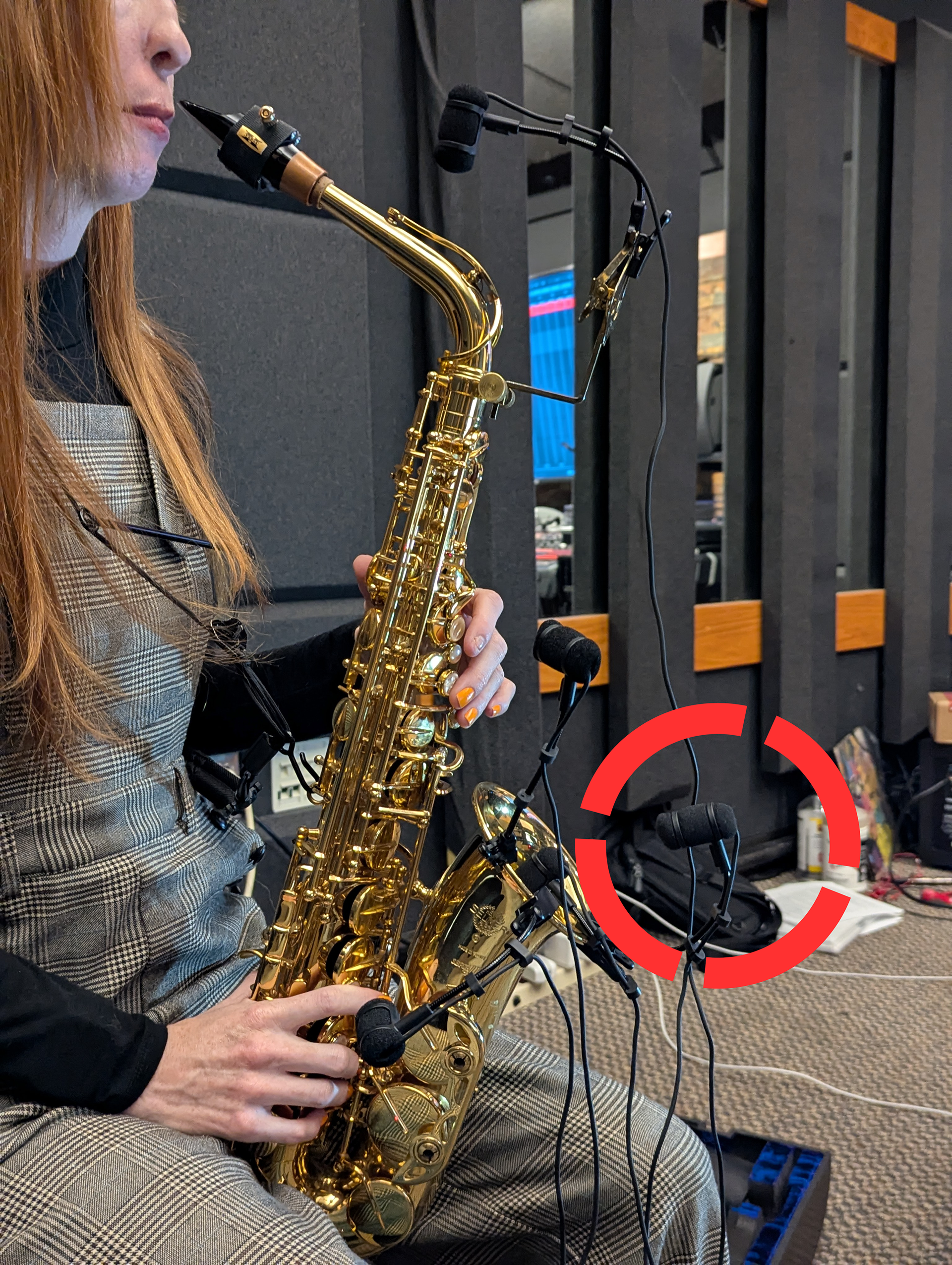
Clip-on mic on the outside of the bell
• Most natural clip-on tone
• Least amount of EQ needed for this kind of microphone
• Best option for live performance
Mounting a clip-on mic just outside the bell provides the most balanced result among clip-on positions. While clip-on microphones rarely sound as natural as stand-mounted mics, this placement preserves body and clarity better than most other mounting locations and avoids extreme tonal imbalance. If that mobility is important to you, this position is a great and classic choice. One that I've used for years in my performances with the IU Indy E/A Ensemble.
⚠️
Positions to Use Carefully (Situational)
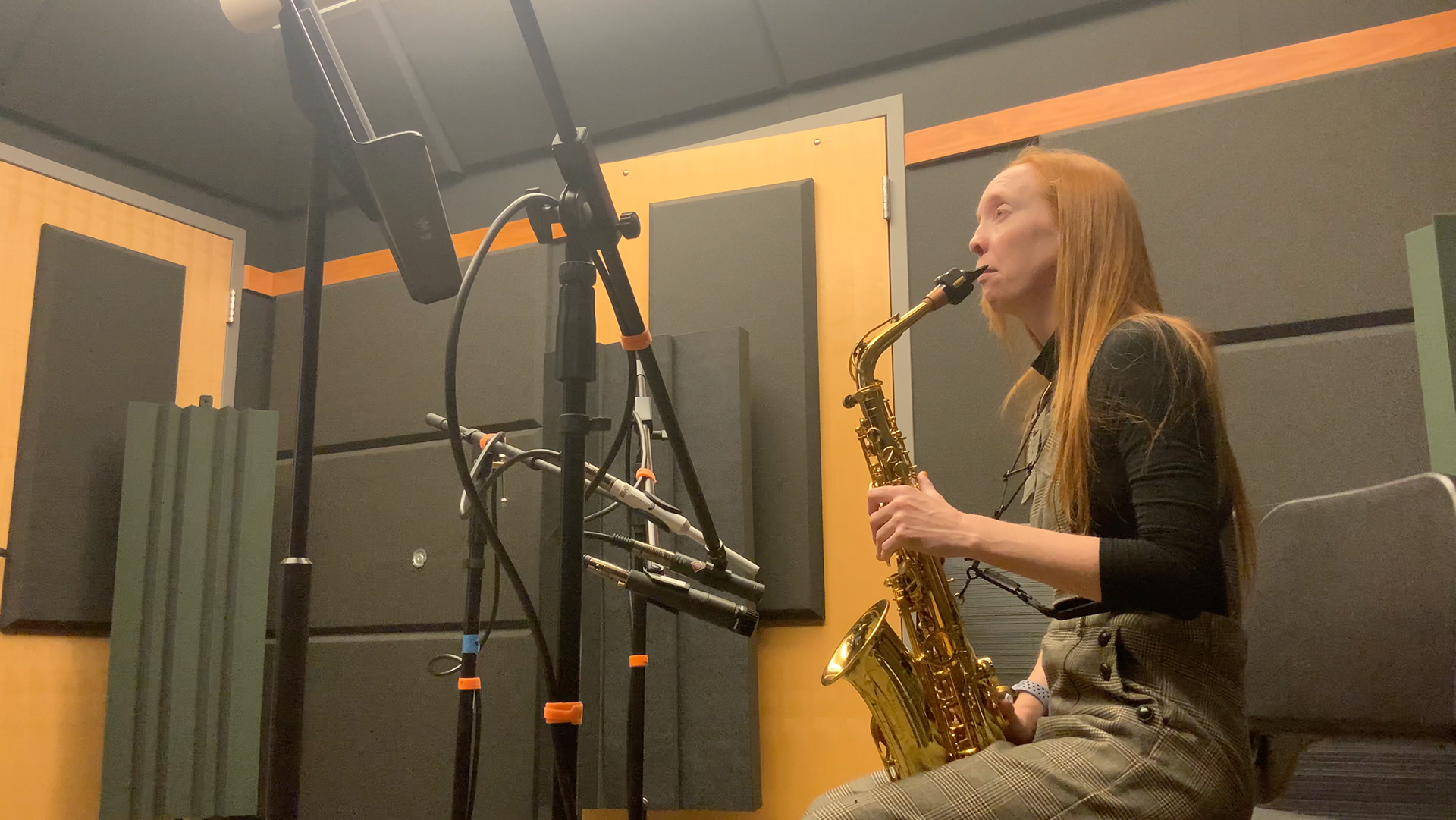
3 inches from the bell
• Very focused and punchy
• Can sound harsh or aggressive
• Reduces room sound
Miking extremely close to the bell produces a tight, forward sound with strong focus, but it often lacks balance on its own. This position exaggerates brightness and breath noise and usually benefits from EQ or blending with another mic. It works well in loud or untreated rooms where isolation is more important than tone.
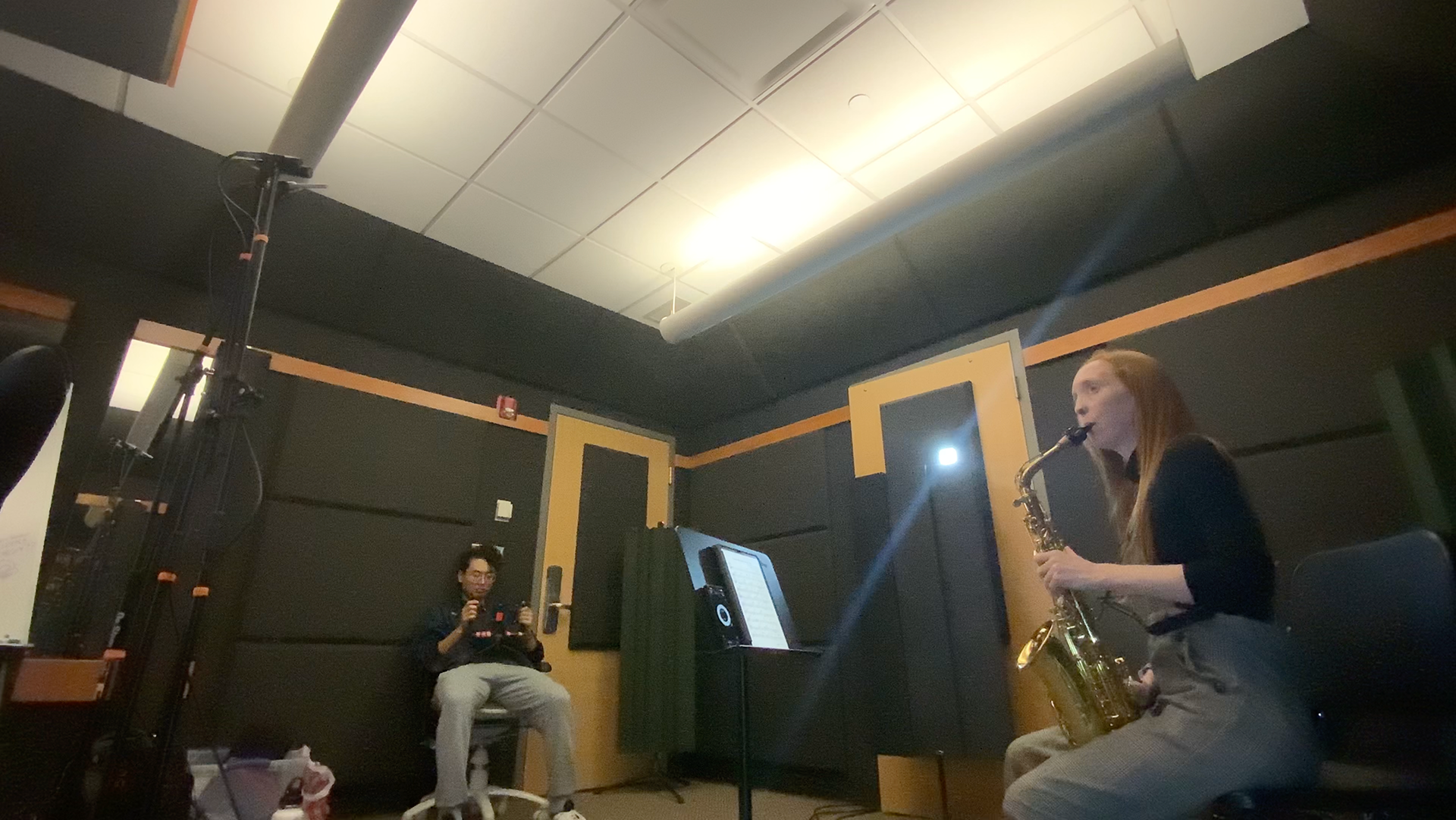
Room mic (6–8 feet away)
• Adds space and realism
• Depends heavily on the room
• Low clarity by itself
A distant microphone captures the saxophone interacting with the room, producing a spacious and natural decay. However, articulation becomes softer and room reflections dominate the sound. This position works best as a secondary mic blended with a closer placement, not as the only microphone.
🚫
Positions to Avoid (Most of the Time)
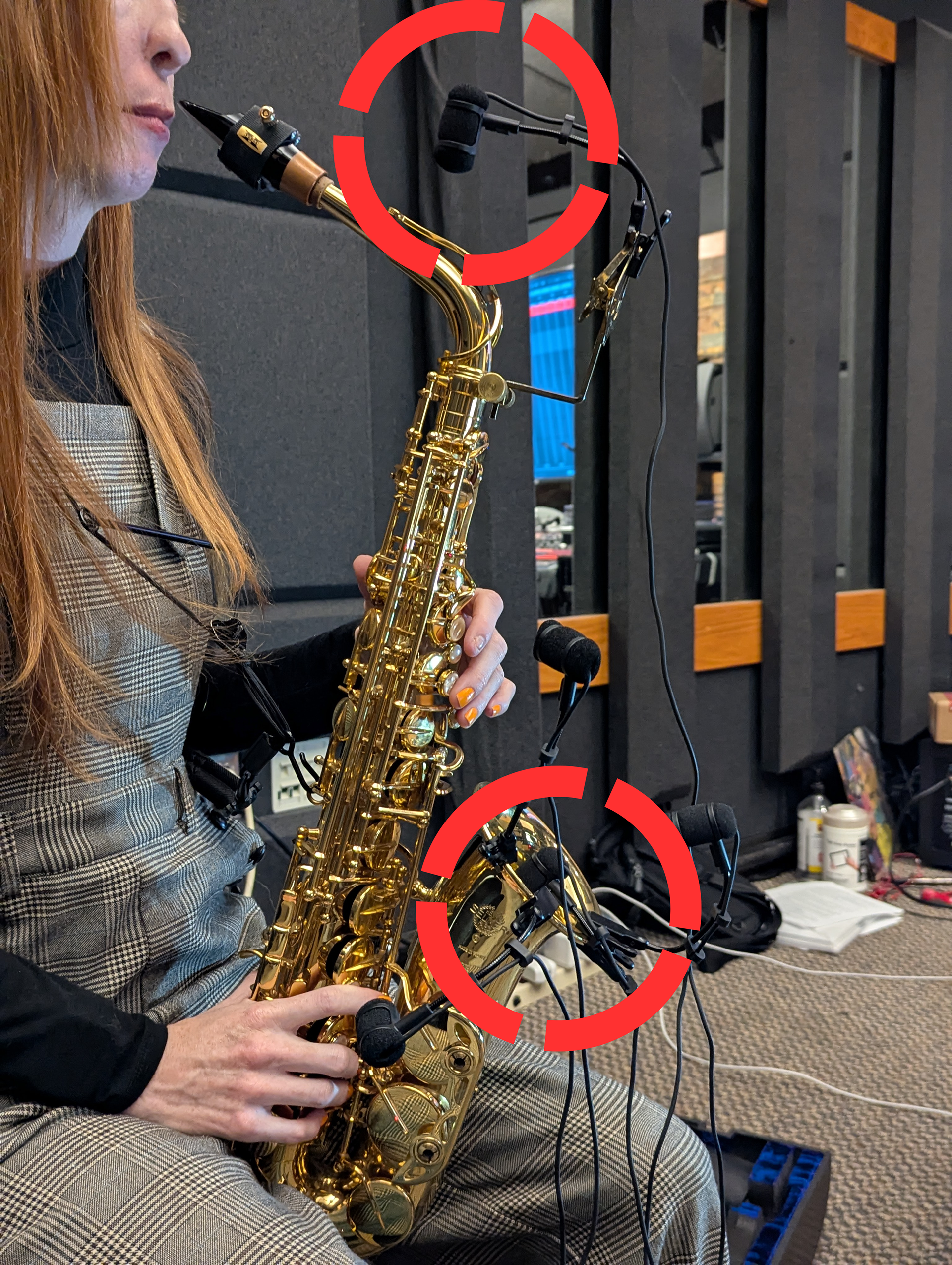
Inside the bell (clip-on)
• Thin, hollow tone
• Extreme imbalance
• Requires heavy EQ
Placing a clip-on microphone inside the bell severely reduces low-frequency body, creating an unnatural and hollow sound. While this can help with feedback rejection, it does not represent the true tone of the instrument and usually needs significant EQ correction to be usable.
Near the mouthpiece / neck
• Thin and noisy
• Emphasizes breath and mechanical sounds
• Poor representation of the instrument
Miking near the mouthpiece captures the sound before it fully develops through the body of the saxophone. This results in a thin tone with increased breath noise and mechanical artifacts. In most cases, this position sounds unbalanced and is best avoided.
📈
Understanding the Data
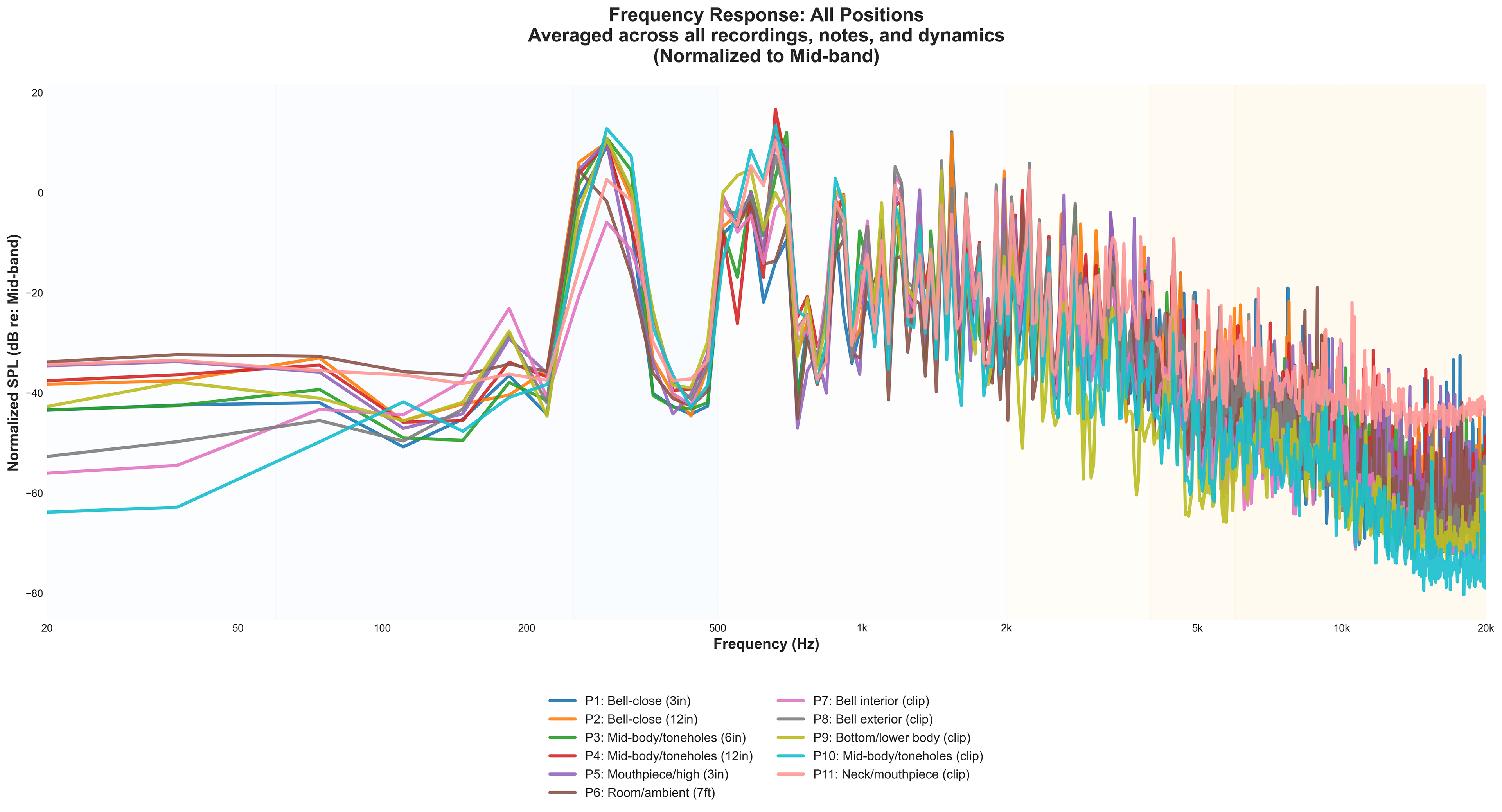
The research measured frequency response across seven bands from sub-bass through brilliance.
Key findings:
• External microphones showed similar low-frequency response but diverged significantly above 2 kHz
• Clip-on microphones exhibited extreme variation and often miss the natural radiation pattern
• Distance matters: Moving from 6 to 12 inches can change tonal balance by several dB in upper frequencies
Need More?
This site only provides a basic overview. For detailed guidance visit:
• Technical Guide - Complete microphone placement reference with specific measurements, frequency response charts, and position-by-position analysis
• Academic Report - Full research methodology, statistical analysis, and technical documentation
• YouTube Video - Audio examples and comprehensive overview of the research documentation
• Other Materials - Get access to all the RAW data including CSV files, graphs, python scripts, and the Ableton Live 12 recording session
This research was conducted as my capstone project for the Bachelor of Science in Music Technology program at Indiana University Indianapolis, under the guidance of Dr. Robin Cox. Thank you to all the faculty for their wonderful support over these last 4 years.
Carson Quick
BS in Music Technology
Indiana University Indianapolis
Class of 2026